Is Wildflower Honey Better? Benefits, Nutrition and Uses
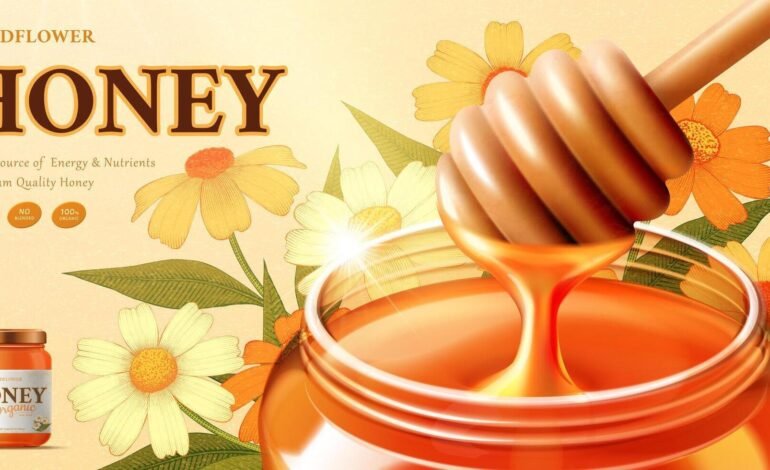

Honey can look similar from one jar to another but its composition is not always the same. The flowers that bees visit in the region where nectar is collected, the season and the way honey is handled can all affect its final characteristics.
Wildflower honey comes from nectar collected from multiple flower sources rather than one dominant floral source. This mix can give it a more varied flavor, color and chemical profile than honey linked to a single plant.
The question is whether that makes it better. The answer is not that simple. Its qualities depend on the flowers involved in the environment, harvesting conditions and processing.
What Makes Wildflower Honey Different?
The main difference is its botanical origin. Bees may collect nectar from several flowering plants in the same area. The exact combination can change from one season or location to another.
This means two jars labeled as wildflower honey may not have identical taste or composition. One may be lighter and mild while another may have a darker color and stronger flavor.
Research supports this variation. Studies have found that the botanical origin of honey can influence its sugar profile, phenolic compounds, antioxidant activity, color and other physical and chemical properties.
How Floral Diversity Can Change Honey
A mixture of flowers gives bees access to different types of plant nectar. Each plant contributes its own chemical characteristics which can influence the final honey.
Flavor and Aroma
Floral sources are one reason honey can taste different from one batch to another. Some batches may have a mild floral taste while others can have stronger herbal, fruity or earthy notes.
The surrounding environment also matters. Soil, climate, season and local vegetation can influence the plants available to bees.
Color
Honey color can range from pale yellow to amber and deep brown. Color is not simply a measure of quality.
Research has found relationships between honey color, phenolic compounds and antioxidant activity in some samples. However the relationship is not universal enough to say that every dark honey is automatically healthier.
Plant Compounds
Different flowers can contribute different phenolic compounds and flavonoids. These plant-based compounds are among the substances researchers study when examining honey’s antioxidant properties.
Studies comparing different floral sources have found meaningful differences in phenolic content and antioxidant activity.
Wildflower Honey Nutrition
Honey is mainly made up of carbohydrates and water. Glucose and fructose are the major sugars while smaller amounts of other sugars and compounds are also present.
Reviews report that honey generally contains around 80–85% sugars and about 15–17% water although the exact composition varies with botanical and geographical origin.
It also contains smaller amounts of proteins, organic acids, enzymes, minerals, vitamins and plant compounds.
| Component | Main role in honey |
| Fructose | Major natural sugar |
| Glucose | Major natural sugar and energy source |
| Water | Affects consistency and storage stability |
| Organic acids | Contribute to flavor and acidity |
| Phenolic compounds | Associated with antioxidant activity |
| Flavonoids | Plant compounds studied for antioxidant effects |
| Enzymes | Contribute to honey’s chemical properties |
| Minerals | Present in relatively small amounts |
Key Points to Know:Because most of its calories come from sugars honey should still be treated as a sweetener and concentrated source of carbohydrates rather than a major source of vitamins or minerals.
Antioxidant Compounds in Honey
Antioxidants are one of the main reasons honey receives attention in nutrition research. Honey contains several compounds that can contribute to antioxidant activity including phenolic acids and flavonoids.
However the amount is not fixed. Botanical origin is an important factor and studies have found different antioxidant levels among honey varieties.
One study comparing multifloral and monofloral honeys found that botanical origin affected antioxidant activity. Another recent study found that honeys with higher phenolic content generally showed stronger antioxidant activity.
This is important because it means the benefits of wildflower honey should not be described as identical for every jar. Its plant sources can change the amount and type of bioactive compounds present.
Potential Health Benefits
Honey has been studied for several possible health effects. However research on honey in general does not automatically prove that every type of honey provides the same effect.
Antioxidant Support
Honey contains phenolic compounds and other substances associated with antioxidant activity. These compounds can help neutralize free radicals in laboratory testing.
The strength of this activity varies between honey samples. Floral and geographical origin are among the factors that influence the amount of these compounds.
This makes antioxidant content an interesting area of research but it should not be used to claim that one particular honey prevents disease.
Cough and Throat Relief
Honey has better-established evidence for symptomatic relief of cough than for many of the broad health claims often made about it.
A systematic review and meta-analysis found that honey may improve cough frequency and severity in people with upper respiratory tract infections compared with usual care. However the researchers also noted limitations in the available evidence.
A separate systematic review focused on children with acute cough found possible benefits for cough and sleep but rated the evidence as low to very low quality.
Honey should never be given to infants younger than one year because of the risk of infant botulism.
A Natural Source of Energy
Because honey contains readily available sugars it can provide a quick source of carbohydrate.
This can make it useful as part of meals, snacks or certain physical activity routines. Still it is calorie-dense so portion size matters.
Raw vs Processed Honey
Raw and wildflower are not the same thing.
“Wildflower” mainly describes the floral source while “raw” refers to how the honey has been handled and processed.
A jar can therefore be wildflower and raw or wildflower and processed. These labels describe different characteristics.
Processing can involve filtration heating or other handling methods. Research reviews indicate that processing and storage can affect some components of honey although the effect depends on the specific conditions and the compounds being measured.
When comparing products it is better to look at the actual label and producer information instead of assuming that one label tells you everything about the honey.
Does the Flower Source Really Matter?
Yes but not in a simple “more flowers means better” way.
A wider floral mixture can create a more varied chemical profile but quality depends on many factors. Studies have found substantial differences between honeys from different botanical sources.
A 2025 study examining multiple honey varieties found differences in phenolic profiles and antioxidant activity. It also noted considerable variation even within some honey varieties which may be related to region, secondary nectar sources and harvest time.
Must-Know Facts:So floral diversity is useful for explaining why honey varies but it should not be treated as a guarantee of superior nutritional value.
How to Choose a Good Jar
The label can provide useful information before buying honey.
Look for details such as:
- Country or region of origin
- Floral source when available
- Harvest or production information
- Ingredient list
- Producer details
- Processing information
- Appropriate storage instructions
A clear source and transparent labeling can make it easier to judge a product.
Key Points to Know:Be cautious with products making very broad medical claims. Honey can be a nutritious food but it is not a replacement for medical treatment.
Is Crystallized Honey Still Good?
Crystallization is a natural process and does not automatically mean honey has spoiled.The balance between glucose, fructose, water, temperature and other factors affects how quickly crystals form. Honey with relatively more glucose may crystallize faster.
Some people prefer smooth liquid honey while others enjoy the thicker texture. If crystallized honey needs to be softened gentle warming is generally preferred over very high heat.
Best Ways to Use It
It can be used in simple ways without turning it into a major part of every meal.
Try a small amount in:
- Plain yogurt
- Oatmeal
- Smoothies
- Tea
- Salad dressings
- Homemade sauces
- Whole-grain toast
- Baking recipes
Key Points to Know:Using honey as a replacement for some added sugar can be practical, but it does not make the food automatically low-calorie.
Is It Better Than Regular Honey?
There is no scientific basis for saying that all wildflower varieties are automatically better than all other honey.
Its main advantage is variety. Different floral sources can create different flavors, colors and concentrations of plant compounds.
If you enjoy a particular batch and it comes from a trustworthy source it can be a good addition to a balanced diet. But nutritional quality should be judged by the whole diet rather than by one sweetener.
What the Research Does Not Prove
Health claims about honey are often broader than the available evidence.
Research supports several interesting properties, especially antioxidant activity and possible cough relief. But laboratory antioxidant tests do not prove that eating a particular honey will prevent chronic disease.
Similarly findings from one floral variety cannot automatically be applied to every mixed-flower product.
This distinction matters when evaluating online claims. Botanical origin, geography, processing, storage and harvest conditions can all influence honey’s composition.
Honey Safety and Precautions
Honey is not suitable for infants under one year because of the risk of botulism.
People managing diabetes or blood glucose levels should also consider its carbohydrate content. Honey is still a source of sugars even though it is natural.
Key Points to Know:Anyone with a known allergy to honey or bee-related products should discuss its use with a healthcare professional.
Sum up
Wildflower honey is different mainly because bees collect nectar from multiple floral sources. That diversity can influence its flavor, color, sugar composition, phenolic compounds and antioxidant activity.
Research shows that honey composition varies with botanical and geographical origin so there is no single nutritional profile for every jar.
It can be enjoyed as a natural sweetener and may offer some useful bioactive compounds. Evidence also supports honey as a possible option for short-term cough relief in some situations. Still it should be viewed as a food rather than a cure.
Key Points to Know:The best choice is a product with clear sourcing, transparent labeling and realistic health claims.
Frequently Asked Questions
Is wildflower honey healthier than regular honey?
Not necessarily. Its nutritional and antioxidant profile can vary depending on the flowers, region, season and processing. It should not automatically be considered healthier than every other type of honey.
Why does wildflower honey taste different?
The flavor depends largely on the different plants that supplied nectar to the bees. Climate, location season and harvesting conditions can also influence taste and aroma.
Is wildflower honey raw?
Not always. Wildflower describes the floral source while raw describes how the honey is processed and handled. A product can be wildflower without being raw.
Does darker honey have more antioxidants?
Some studies have found a relationship between darker color and higher antioxidant activity but this is not a universal rule. Color alone cannot determine the nutritional quality of a particular jar.
Can honey help with a cough?
Research suggests that honey may provide symptomatic relief for acute cough particularly in children over one year of age. Evidence quality varies so it should not be considered a cure for the underlying illness.