Using Neem Oil For Black Spot on Roses Without Damaging Leaves
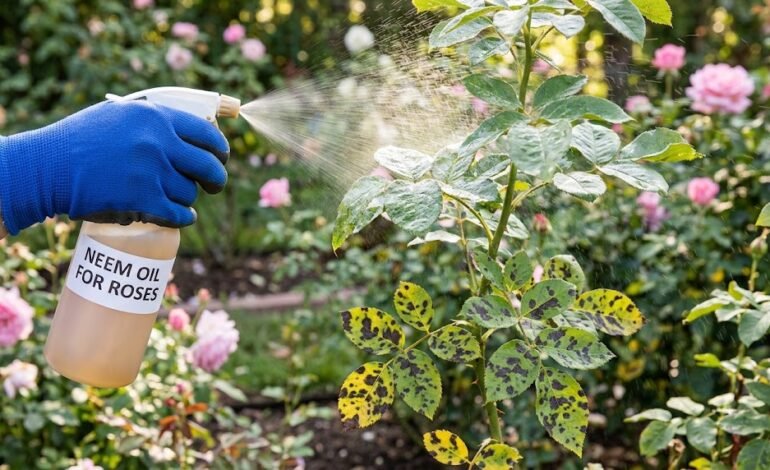

Black spots with yellow areas can cause rose leaves to turn yellow and fall off. Neem oil may help manage the disease but results vary by product. Before using neem oil for black spots on roses, check the label and follow the instructions to avoid leaf damage.
Can Neem Oil Help With Black Spot on Roses?
Rose black spot is a fungal disease that causes dark, round spots on leaves and can spread in wet conditions. Some neem oil products may help manage certain fungal diseases but their effectiveness depends on the product and its approved use. Neem oil for black spots on roses may support disease management when the label recommends it for this purpose. However it should be combined with removing infected leaves, improving airflow and watering at soil level. If the disease continues to spread, consider a treatment specifically labelled for rose black spot.
Choose a Suitable Neem Oil Product
Not all neem oil products are made for the same purpose. Some are sold as general garden oils while others contain ingredients intended for specific plant problems.
When comparing products check these details:
- Approved use: The label should list roses and the disease or pest you want to treat.
- Mixing instructions: Some products are ready to use while others need dilution.
- Application rate: Use only the amount stated on the label.
- Safety directions: Check any instructions about temperature, protective equipment, and repeat applications.
- Plant warnings: Make sure the product is suitable for your rose variety.
Key Points to Know:Gardeners searching for neem oil black spot roses should not assume that every product will control the disease. Read the label before spraying and never make the mixture stronger than recommended.
Test Neem Oil Before Spraying the Whole Plant
Even a product labelled for garden use may damage sensitive leaves under certain conditions. Testing a small area first can help you notice a problem before spraying the entire rose bush.
Follow these steps:
- Prepare the product exactly as the label directs.
- Spray a small section of the plant.
- Wait for the period recommended on the label and inspect the treated leaves.
- Look for browning, curling, faded patches or scorched edges.
- If the leaves show damage do not spray the rest of the plant.
This small test is especially useful when the rose bush has young leaves or is already stressed by heat, drought or disease.
Key Points to Know:People looking for neem oil for black spots on roses should remember that safe application matters as much as the product itself. A treatment that damages the leaves can make the plant look worse.
Apply Neem Oil in Suitable Weather
Weather plays an important role when applying oil-based garden products. Strong sunlight and high temperatures can increase the risk of leaf damage.
For safer application:
- Avoid spraying during hot weather.
- Do not spray roses in strong, direct sunlight.
- Follow the label’s temperature limits.
- Check the forecast and avoid conditions that could wash the product off before it has had the recommended time to dry.
- Avoid spraying drought-stressed or badly wilted roses.
- Do not apply more often than the label allows.
Key Points to Know:Spray roses in the early morning or evening when the weather is suitable. Avoid keeping leaves wet for long periods. Always follow the product label when using Neem Oil For Black Spot on Roses.
Spray Roses Without Damaging Their Leaves
The way you apply neem oil can affect how well your roses tolerate it. Too much product or repeated applications may harm leaves even when the mixture is prepared correctly.
Use these practical steps:
- Shake the product if the label instructs you to do so.
- Use the correct dilution for concentrate products.
- Apply a light, even coating rather than soaking the entire bush.
- Avoid spraying flowers or other sensitive parts unless the label allows it.
- Do not mix neem oil with other garden products unless the label confirms that the combination is safe.
- Clean the sprayer after use according to its instructions.
If you notice leaf burn after treatment stop applying the product. Check the label and review the weather conditions and mixing rate before deciding what to do next.
The phrase neem oil spray for black spot on roses often appears in gardening searches but the safest spray is one used according to its label. More products does not mean better disease control.
Remove Infected Leaves to Limit Spread
Neem oil alone may not be enough to manage rose black spots. Removing infected plant material and changing how you care for the bush can help reduce the spread of the disease.
Start by removing leaves that show clear signs of infection. Pick up fallen leaves from the ground, too because infected debris can allow the fungus to survive and cause further problems.
Keep these habits in your routine:
- Remove badly infected leaves when practical.
- Clean up fallen leaves around the base of the plant.
- Dispose of infected material appropriately rather than leaving it beneath the rose bush.
- Water the soil near the roots instead of spraying the foliage.
- Prune overcrowded growth when needed to improve airflow.
- Clean pruning tools after working with diseased plants.
These steps support a healthier growing environment. They also help reduce the conditions that allow the disease to return.
Must-Know Facts:Gardeners considering neem oil for rose black spot should treat sanitation and watering as important parts of the process not optional extras.
Avoid Using Neem Oil Too Close to Sulfur Sprays
Avoid applying neem oil too close to sulfur sprays as the combination can damage rose leaves. Check both product labels for safe waiting times and never mix neem oil with other treatments unless the instructions allow it.
What to Do if Black Spot Keeps Returning
Rose black spots can return because of wet leaves, poor airflow and infected leaves left around the plant. If the spots continue, confirm the disease and check whether your neem oil product is labelled for it. Remove infected leaves, water at soil level and improve airflow. For severe or recurring infections, consider a treatment specifically labelled for rose black spot or grow disease-resistant rose varieties.
Frequently Asked Questions
Can neem oil remove black spots from rose leaves?
Neem oil will not make existing spots disappear. A suitable labelled product may help manage certain fungal problems but results vary. Remove badly infected leaves and improve growing conditions as part of your care routine.
How often should I spray roses with neem oil?
Follow the product label for the application rate and timing. Do not spray more frequently than recommended because repeated applications can damage leaves.
Can I spray neem oil on roses in summer?
It depends on the temperature, the condition of the plant, and the product instructions. Avoid spraying in high heat or direct sunlight and follow the label’s temperature limits.
Should I remove rose leaves with black spots?
Yes. Remove clearly infected leaves when practical and pick up fallen leaves around the plant. This helps reduce infected material near the rose bush.
Why do black spots return after treatment?
The disease may return because of wet foliage, infected leaves left behind, poor airflow or an unsuitable treatment. Check the diagnosis and product label and continue good garden hygiene.
Sum up
Neem oil for black spot on roses should be used carefully and only when the product label supports the intended use. Test a small area first to avoid hot and sunny conditions and never apply a stronger mixture than recommended. Remember that neem oil is only one possible part of disease management. Removing infected leaves, keeping foliage as dry as practical, improving airflow and choosing disease-resistant roses can also help. If black spot continues to spread, seek advice about a treatment specifically labelled for the disease.
home…..