


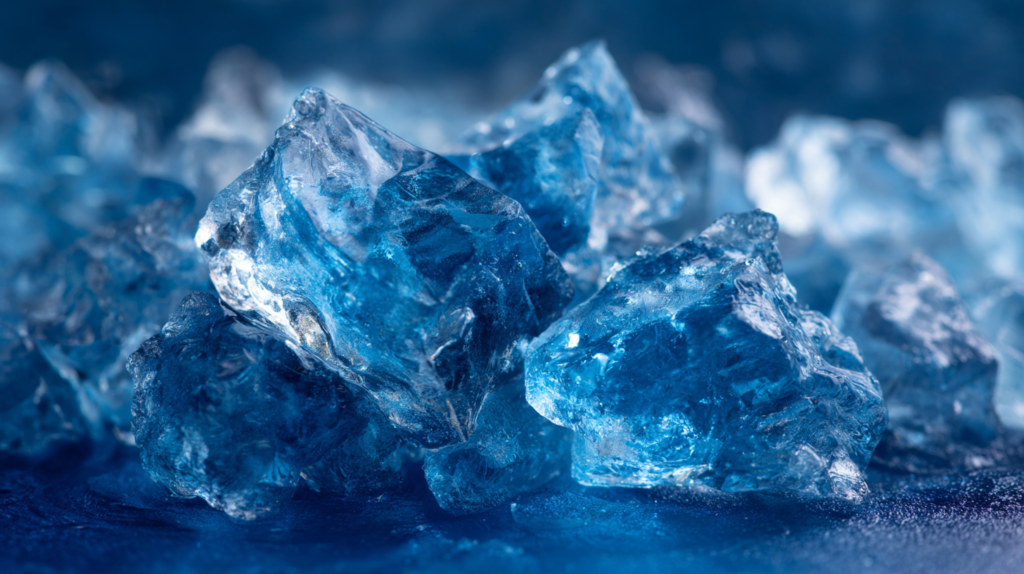
Glacial acetic acid is one of the most important chemicals in laboratories and industries worldwide. It is a pure form of acetic acid with a concentration exceeding 99%, making it highly reactive and versatile. Its name “glacial” comes from its ability to freeze just below room temperature, forming ice-like crystals. This chemical plays a vital role in the production of various organic compounds and is an essential reagent in chemical research and manufacturing.
This article tells glacial acetic acid in detail, including its physical properties, chemical structure, industrial applications, and safety considerations. By understanding its characteristics, users can handle it efficiently while leveraging its benefits for multiple applications.
1:Properties That Define the Substance
Glacial acid is a colorless liquid with a pungent vinegar-like odor. It is highly miscible with water and many organic solvents, which makes it suitable for chemical reactions. One of its most notable properties is its melting point, which is approximately 16.6°C (61.9°F). Because of this low melting point, glacial acid can solidify into ice-like crystals at room temperature in cold environments, hence the name “glacial.”
Another key property is its density, which measures about 1.05 g/cm³ at 20°C. This density allows chemists to calculate precise volumes for reactions and industrial processes. The high purity and predictable density make glacial acid a standard in many laboratory protocols.
Other notable physical properties include:
- Boiling point: 118°C
- Refractive index: 1.371
- Solubility: Fully miscible with water and ethanol
- Appearance: Colorless, clear, liquid
2:Glacial Acetic Acid Structure
The chemical structure of glacial acid is fundamental to understanding its reactivity. Chemically, it is represented as CH₃COOH. The molecule contains two primary functional groups: a methyl group (CH₃) and a carboxyl group (COOH). The carboxyl group is responsible for the acidic nature of the compound, allowing it to donate a hydrogen ion (H⁺) in reactions.
Structural Diagram of Glacial Acid:
H
|
H — C — C = O
|
OH
In this structure:
- The left CH₃ group is non-polar and hydrophobic.
- The right COOH group is polar and acidic.
- The double-bonded oxygen (C=O) in the carboxyl group contributes to its reactivity in organic synthesis.
The combination of polar and non-polar regions makes glacial acid miscible with both water and organic solvents, a property highly useful in chemical reactions and industrial processes.
3:Freezing and Melting Temperature Insights
The melting point of glacial acetic acid is one of its defining features. At 16.6°C, it begins to solidify into crystalline ice-like structures. This property is important for storage and transportation. In colder climates, containers must be kept above the freezing point to maintain its liquid state. Conversely, in warmer conditions, the chemical remains liquid and ready for use.
The predictable melting point also makes it a reference substance in some laboratory calibration processes. It is essential to note that even slight impurities can lower or raise the melting point, affecting experimental outcomes.
4:Industrial and Laboratory Uses
Glacial acetic acid uses are extensive and diverse. It serves as a key raw material in industrial chemical synthesis, including:
- Production of acetate esters for perfumes and flavorings
- Manufacture of vinegar and food additives
- Synthesis of cellulose acetate, used in films and textiles
- Pharmaceutical applications, including aspirin and other medicines
- Laboratory reagent in titrations and organic reactions
Its versatility also extends to cleaning and solvent applications. Industries rely on glacial acid because it reacts predictably with other chemicals, making it ideal for both small-scale laboratory work and large-scale industrial production.
5:Safety Considerations
While glacial acid is highly useful, it is also corrosive and toxic. Direct contact with the skin or eyes can cause severe burns, and inhalation of vapors may irritate the respiratory tract. Safe handling practices include:
- Using gloves, goggles, and lab coats
- Working in a well-ventilated area or fume hood
- Storing in tight, chemical-resistant containers
- Keeping the chemical away from heat and incompatible materials, such as strong oxidizers
Proper storage and handling are critical, especially because glacial acid is highly concentrated and can react violently with certain metals or bases.
6:Chemical Reactivity
Glacial acid is highly reactive due to its carboxyl group. It participates in a variety of chemical reactions:
- Esterification: Reacts with alcohols to form esters, a common reaction in fragrances and solvents.
- Neutralization: Reacts with bases to form acetate salts.
- Reduction: Can be reduced to ethanol using suitable reducing agents.
- Dehydration: Forms acetic anhydride when treated with dehydrating agents.
This reactivity is one of the reasons it is widely used in laboratories, where predictable behavior is crucial for organic synthesis and analysis.
7:Glacial Acid Density
The density of glacial acetic acid is approximately 1.05 g/cm³ at 20°C. This density is slightly higher than water, which allows chemists to measure volumes precisely in reactions. Accurate density knowledge is also important in industrial processes, where large-scale mixing and chemical manufacturing require exact ratios to prevent unwanted side reactions or inefficiencies.
8:Handling and Storage
Due to its corrosive nature, glacial acid requires careful handling. It should be stored in cool, dry places, away from metals, oxidizers, and bases. Containers should be made of materials resistant to corrosion, such as glass, certain plastics, or stainless steel.
In labs, it is recommended to use fume hoods during experiments to avoid inhalation of vapors. Spills should be neutralized with sodium bicarbonate and cleaned with proper protective equipment.
9:Environmental Impact
Glacial acid is biodegradable in small concentrations. However, large spills can lower the pH of water bodies, harming aquatic life. Industrial facilities must follow strict regulations to treat waste containing acetic acid before disposal.
Its relatively low toxicity compared to other industrial acids makes it a preferred choice for chemical manufacturing and laboratory use, provided proper safety measures are taken.
10:Glacial Acetic Acid vs Dilute Acetic Acid
While glacial acid is over 99% pure, dilute acetic acid, like household vinegar, contains only 4–8% acetic acid. The higher concentration in glacial acid makes it far more reactive and hazardous, but also more effective in industrial reactions. Dilute acetic acid is safe for cooking and food use, while glacial acid is strictly for industrial or laboratory purposes.
Wrap up
Glacial acetic acid is a highly concentrated form of acetic acid with remarkable versatility and reactivity. Its melting point, density, and chemical structure make it essential for laboratories and industrial processes alike. It serves as a key ingredient in chemical synthesis, pharmaceuticals, and industrial manufacturing, while its safety precautions ensure responsible handling. Understanding its structure, properties, and applications allows chemists and industries to leverage its full potential effectively.
Whether it is for creating esters, salts, or other chemical compounds, glacial acid remains a cornerstone in modern chemistry.
Key Questions and Solutions
1. What is glacial acetic acid?
Glacial acid is a concentrated form of acetic acid with over 99% purity, known for its ice-like crystals at temperatures below 16.6°C.
2. What are the main uses of it?
It is used in chemical synthesis, pharmaceuticals, food additives, and as a laboratory reagent for esterification, neutralization, and other reactions.
3. What is the melting point of it?
The melting point of it is approximately 16.6°C (61.9°F).
4. How should it be stored?
It should be stored in cool, dry, chemical-resistant containers, away from heat, metals, and incompatible substances like strong oxidizers.
5. What is the chemical structure of it?
Its chemical formula is CH₃COOH, consisting of a methyl group (CH₃) and a carboxyl group (COOH), making it polar, acidic, and highly reactive.