


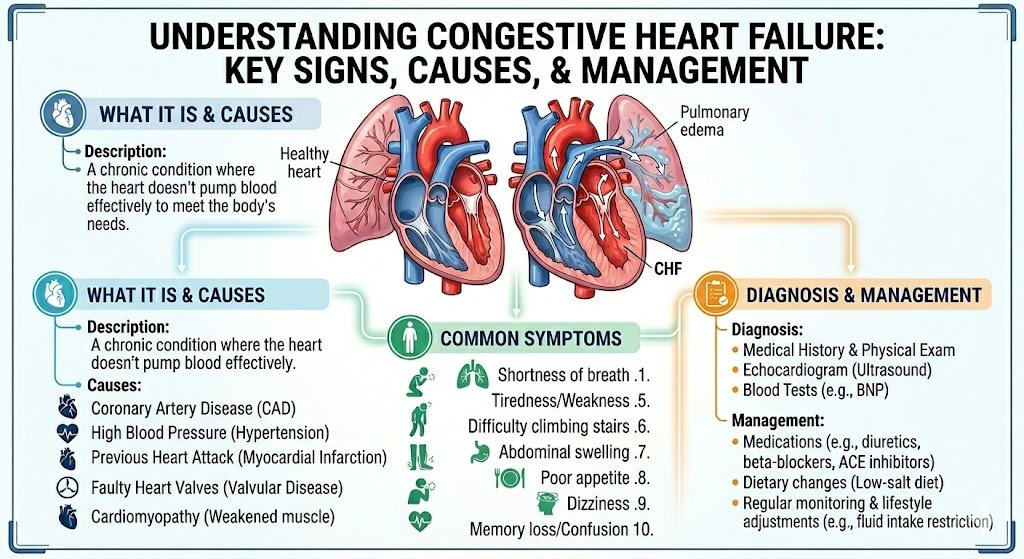
Heart health plays a major role in overall well-being. Many heart conditions develop slowly and may not show obvious symptoms at first. One of these conditions is Congestive Heart Failure. Learning the early warning signs can help people seek medical care before the condition becomes more serious.
What Is Congestive Heart Failure?
Congestive Heart Failure is a long-term condition in which the heart cannot pump blood as efficiently as it should. The heart still works but it becomes too weak or too stiff to supply enough oxygen-rich blood to the body’s organs and tissues. As a result fluid may build up in the lungs, legs, feet, or other parts of the body.
This condition does not mean that the heart has completely stopped working. Instead, it means the heart needs medical treatment and healthy lifestyle changes to function better. Early diagnosis and proper management can improve quality of life and reduce complications.
1. Shortness of Breath
One of the earliest warning signs is shortness of breath. You may notice difficulty breathing while walking, climbing stairs, exercising or even lying flat in bed. This happens because fluid collects in the lungs and makes breathing more difficult.
Persistent breathing problems should never be ignored, especially if they become worse over time.
2. Swelling in the Legs, Ankles or Feet
When the heart cannot pump blood effectively, fluid may collect in the lower parts of the body. This causes swollen ankles, feet and legs.
The swelling may increase during the day and become more noticeable after standing or sitting for long periods.
3. Constant Fatigue
Feeling tired after a busy day is normal. However extreme fatigue that continues for weeks may signal a heart problem.
When the heart cannot deliver enough blood to the muscles everyday activities become more difficult. Even simple tasks such as walking around the house may leave you feeling exhausted.
4. Persistent Cough or Wheezing
A persistent cough that produces white or pink mucus can occur when fluid builds up inside the lungs. Some people also experience wheezing or a feeling of tightness in the chest.
A cough that does not improve with regular treatment should be evaluated by a healthcare professional.
5. Rapid or Irregular Heartbeat
The heart may beat faster than normal in an attempt to pump more blood throughout the body. This can cause heart palpitations, fluttering sensations or an irregular heartbeat.
Frequent episodes should never be ignored because they may indicate worsening heart function.
6. Sudden Weight Gain
Unexpected weight gain over a few days may result from fluid retention not body fat.
Gaining several pounds within a short period without changing your diet or activity level can be an important warning sign that requires medical attention.
7. Reduced Ability to Exercise
People often notice they can no longer perform activities that once felt easy. Walking short distances, climbing stairs or carrying groceries may become difficult because the body receives less oxygen-rich blood.
A noticeable drop in physical endurance should always be discussed with a doctor.
8. Frequent Nighttime Urination
Many people with heart failure wake up several times during the night to urinate.
When lying down fluid stored in the legs returns to the bloodstream and reaches the kidneys, increasing urine production during sleep.
9. Loss of Appetite and Nausea
Fluid buildup around the digestive organs can cause poor appetite, bloating, nausea or a feeling of fullness after eating only a small meal.
Ignoring these symptoms may delay diagnosis and treatment.
10. Difficulty Concentrating or Confusion
The brain depends on a steady supply of oxygen-rich blood. Reduced blood flow may cause confusion, poor concentration, memory problems or dizziness especially in older adults.
These symptoms should receive prompt medical evaluation because they may indicate reduced heart function.
Tips For Living With Congestive Heart Failure
Although Heart Failure is a serious condition many people live healthier lives by following the right treatment plan.
- Eat a heart-healthy diet that is low in salt.
- Exercise regularly according to your doctor’s advice.
- Maintain a healthy body weight.
- Control high blood pressure, diabetes and cholesterol.
- Avoid smoking and limit alcohol intake.
- Take prescribed medications exactly as directed.
- Monitor your weight daily to detect fluid buildup early.
- Schedule regular medical checkups and report new symptoms promptly.
Quick Note
Congestive Heart Failure develops when the heart cannot pump blood efficiently enough to meet the body’s needs. Recognizing the warning signs early can lead to faster diagnosis and better treatment outcomes. Symptoms such as shortness of breath, leg swelling, fatigue, persistent cough, rapid heartbeat and sudden weight gain should never be ignored. A healthy lifestyle, regular medical care and following your treatment plan can help protect your heart and improve your quality of life.
Frequently Asked Questions
1. What is the first warning sign of Heart Failure?
The earliest sign is often shortness of breath especially during physical activity or while lying down.
2. Can Congestive Cardiac Failure be treated?
Yes. Although there is no complete cure in many cases, medications, healthy lifestyle changes, and regular medical care can effectively manage the condition.
3. What causes Chronic Heart Failure ?
Common causes include high blood pressure, coronary artery disease, heart attacks, diabetes and damaged heart muscles.
4. Is Cardiac Failure life-threatening?
It can become serious if left untreated. Early diagnosis and proper treatment significantly improve outcomes.
5. When should I see a doctor?
Seek medical attention immediately if you experience severe shortness of breath, chest pain, sudden swelling, rapid weight gain or an irregular heartbeat.