


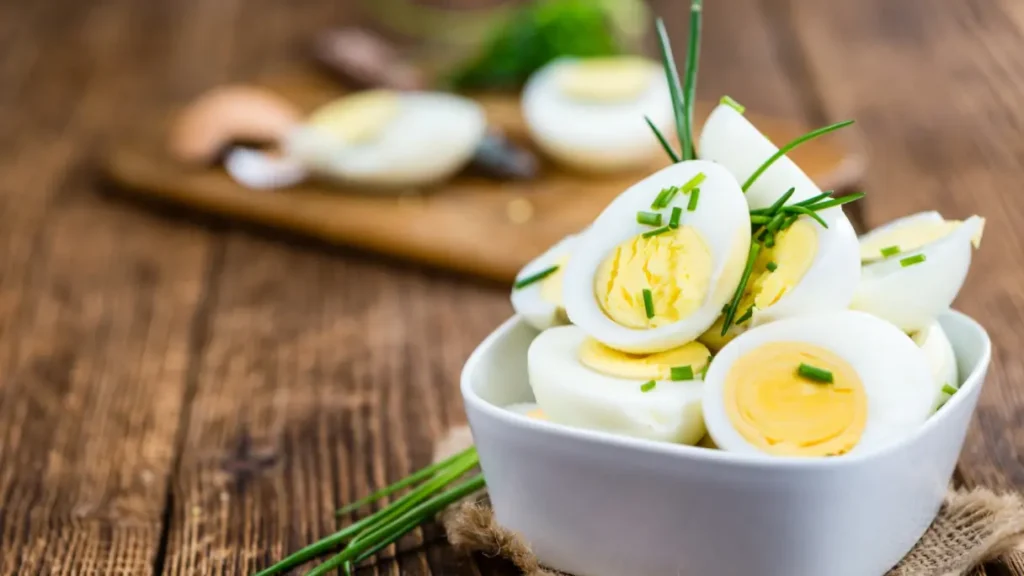
Hard boiled eggs are easy to prepare and useful for quick meals. Many people make several eggs at once and keep them for later. This can save time during busy days.
But what happens when you have more eggs than you can eat within a few days? You may wonder can you freeze hard boiled eggs and use them later?
The answer is a little more complicated than a simple yes or no. Freezing can affect the texture of both the egg white and yolk. For this reason the freezer is not usually the best choice for whole hard boiled eggs.
Can You Freeze Hard Boiled Eggs?
According to FoodSafety.gov hard-cooked eggs should be kept in the refrigerator for up to one week and should not be frozen. The FDA also recommends eating hard-cooked eggs within one week after cooking.
So can you freeze hard boiled eggs? Technically you can place them in a freezer. However, freezing whole hard boiled eggs is not recommended if you want a good texture after thawing.
The egg white contains a lot of water. Freezing causes water inside the egg to form ice crystals. This can change the structure of the white. After thawing it may become rubbery or watery.
The yolk generally handles freezing better than the white. This makes separating the yolk before freezing a more practical option when you need longer storage.
Why Whole Hard Boiled Eggs Do Not Freeze Well
Freezing does not simply keep an egg exactly as it is. Ice crystals form during the freezing process. These crystals can affect the texture of foods.
The biggest issue with whole hard boiled eggs is usually the white. After thawing the white may become firm, chewy or slightly watery. It may not have the same soft texture as a freshly cooked egg.
This does not mean a frozen egg automatically becomes unsafe. The main concern is quality and texture. FoodSafety.gov specifically lists hard-cooked eggs as a food that should not be frozen.
If you want eggs for salads, snacks or breakfast, refrigeration is generally a better option.
The Better Option: Refrigerate Hard Boiled Eggs
For most people the refrigerator is the easiest solution. USDA guidance says hard-cooked eggs can be kept refrigerated for up to seven days. This applies to eggs that are still in their shells as well as peeled eggs.
Good hard boiled egg storage starts with cooling the eggs properly after cooking. Refrigerate them within two hours. Keep the refrigerator at 40°F or below.
You can keep the eggs in a covered container. If they are peeled a sealed container can help protect them from odors and moisture in the refrigerator.
It is also useful to label the container with the cooking date. This makes it easier to keep track of how long the eggs have been stored.
How to Store Hard Boiled Eggs Safely
Storing hard boiled eggs does not require complicated equipment. A clean refrigerator and a suitable container are usually enough.
Follow these simple steps:
- Cook the eggs until the yolks and whites are firm.
- Cool the eggs after cooking.
- Refrigerate them within two hours.
- Keep them in a clean covered container.
- Use them within seven days.
- Discard eggs that have been left at room temperature for too long.
Key point to know:USDA advises that cooked eggs should not remain at room temperature for more than two hours. If the surrounding temperature is above 90°F the limit drops to one hour.
Freezing Egg Yolks for Later
If you need to preserve eggs for longer than a week you may consider freezing egg yolks instead of freezing whole hard boiled eggs.
Egg yolks can be frozen in some forms although their texture can change. FoodSafety.gov notes that raw yolks do not freeze particularly well on their own. They can be prepared properly for freezing as part of an egg mixture.
For cooked eggs, separating the yolks can also be more practical than freezing the entire egg. The yolks may work better in certain recipes after thawing.
However freezing does not make every egg preparation suitable for long-term storage. Consider how you plan to use the eggs before putting them in the freezer.
The Best Way to Store Boiled Eggs
The best way to store boiled eggs for normal household use is usually refrigeration rather than freezing.
Keep the eggs cold and use them within seven days. You do not need to freeze them simply because you cooked several eggs at once.
If you know you will eat the eggs during the week, refrigeration helps preserve their normal texture. It also follows the storage guidance provided by food safety authorities.
If you have more eggs than you can use within that period, consider using them in different meals. You can add them to salads, sandwiches or breakfast dishes.
How Long Do Hard Boiled Eggs Last?
Hard boiled eggs can last for up to one week in the refrigerator when stored correctly. This is the storage period recommended by USDA and FDA guidance.
The seven-day period starts after cooking. Keeping the eggs refrigerated at the correct temperature is important throughout this time.
Do not rely only on smell or appearance when deciding whether a food is safe. Some harmful bacteria may not change the smell or appearance of food.
When in doubt about an egg that has been stored improperly, throwing it away is the safer choice.
Egg Texture After Freezing
If you freeze a whole hard boiled egg the texture can change after thawing. The white may become tough or rubbery. It can also develop a slightly watery texture.This is why frozen hard boiled eggs may not be pleasant to eat on their own.
The change is mainly a quality issue. Freezing stops bacterial growth while food remains frozen at the proper temperature. However freezing does not destroy most bacteria. Safe handling before freezing and after thawing is still important.
If an egg has already been frozen accidentally, how it was handled matters. USDA advises that shell eggs that freeze accidentally should be discarded if the shell cracked.
Using Hard Boiled Eggs for Meal Prep
Meal prep often involves cooking several eggs ahead of time. This can make breakfast and snacks easier during the week.
However can you freeze hard boiled eggs for meal prep? It is generally better to prepare only the number you can eat within the recommended refrigerated storage period.
Hard boiled eggs are already convenient to store in the refrigerator. Freezing them can create unnecessary texture problems.
If you want freezer-friendly meal prep, consider recipes where eggs are incorporated into a dish that is suitable for freezing. Whole hard boiled eggs are not an ideal freezer food.
Signs You Should Not Eat a Stored Egg
Proper storage is important but you should still check the egg before eating it.
Avoid eating a hard boiled egg if:
- It has been left unrefrigerated for too long.
- It has been stored beyond the recommended period.
- The egg has an unusual appearance.
- The egg has been exposed to unsafe storage conditions.
- You are unsure how long it has been sitting out.
Key point to know:Food safety guidance also recommends keeping refrigerated foods at 40°F or below. Your refrigerator should be cold enough to keep perishable foods safely chilled.
Sum up
So can you freeze hard boiled eggs? It is possible to freeze them but food safety authorities recommend against freezing hard-cooked eggs because the quality can suffer. Refrigeration is the better choice for cooked eggs.Keep hard boiled eggs refrigerated and use them within seven days. If you need to store eggs for longer consider using a preparation that is more suitable for freezing.For everyday use proper refrigeration gives you better texture and follows established food safety guidance.
home……