


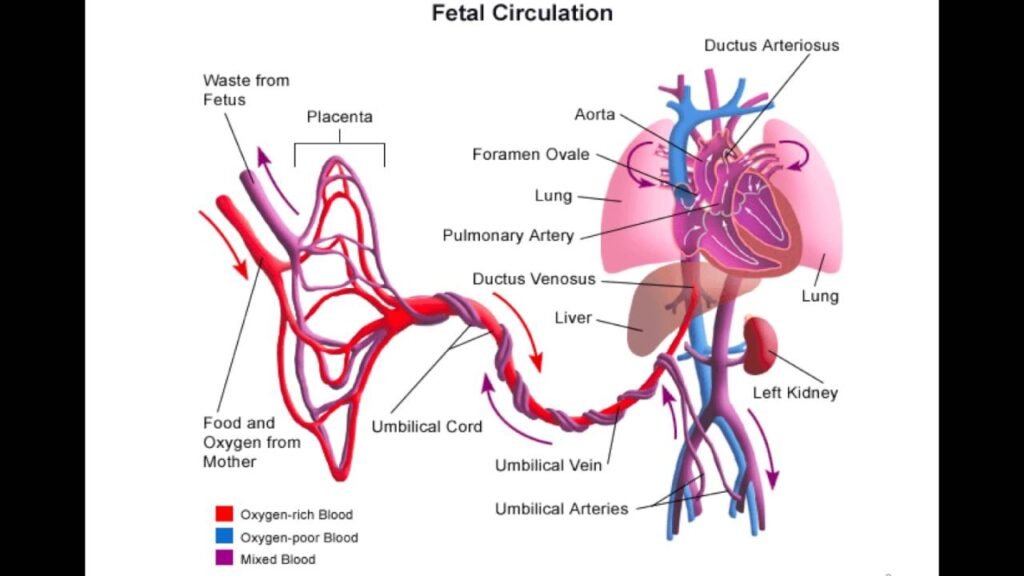
Fetal circulation is the blood flow system that works in a baby before birth. The baby does not use the lungs for oxygen because they are still developing. Instead the placenta provides oxygen and nutrients and sends them to the baby through special blood vessels.
This system helps the baby’s organs grow properly during pregnancy. After birth the lungs start working, and the blood flow changes to the normal circulation system.
How Does Blood Flow in a Baby Before Birth?
Before birth, blood follows a different pathway because the baby gets oxygen from the placenta. Oxygen-rich blood travels from the placenta through the umbilical vein and enters the baby’s body.
The blood moves toward the heart through special vessels. These pathways help blood avoid the lungs because the baby does not use them for oxygen exchange before birth.
How Is Fetal Circulation Different from Normal Circulation?
Normal circulation uses the lungs to add oxygen to the blood. The heart then pumps this oxygen-rich blood to all parts of the body.
In fetal circulation the placenta provides oxygen instead of the lungs. Special openings and blood vessels allow blood to bypass the lungs before birth. After delivery these pathways close, and normal circulation begins.
Role of Placenta in Baby’s Blood Supply
How Does the Placenta Provide Oxygen?
The placenta transfers oxygen from the mother’s blood to the baby’s blood. It creates a connection between the mother and baby during pregnancy.
The oxygen then reaches the baby’s organs through blood vessels. This supply helps support healthy growth and development before birth.
How Does the Placenta Supply Nutrients and Remove Waste?
The placenta provides important nutrients such as glucose vitamins and minerals to the baby. These nutrients help the baby build tissues and develop organs.
The placenta also removes waste products like carbon dioxide from the baby’s blood. The mother’s body processes and removes these waste materials.
Why Is the Placenta Called the Baby’s Temporary Organ?
The placenta works as a temporary support system for the baby before birth. It provides oxygen, supplies nutrients and removes waste like some organs normally do after birth.
After delivery the baby’s lungs, digestive system and kidneys start performing these functions. The placenta is no longer needed.
How Oxygen-Rich Blood Reaches the Fetus
Role of the Umbilical Vein
The umbilical vein carries oxygen-rich blood and nutrients from the placenta to the baby. It plays an important role in providing the resources needed for growth and development before birth.
Unlike normal veins, the umbilical vein carries oxygenated blood during pregnancy. This blood helps supply the baby’s organs with essential oxygen and nutrients.
How Does Oxygen-Rich Blood Travel to the Baby?
Oxygen-rich blood leaves the placenta and enters the baby through the umbilical vein. It then passes through the ductus venosus, which helps move blood toward the heart.
After reaching the heart, the blood travels to different parts of the baby’s body. This process ensures that important organs receive enough oxygen for proper development.
Where Does Blood Flow Start in Fetal Blood Circulation?
Blood flow starts at the placenta where the baby receives oxygen and nutrients from the mother. The blood then enters the umbilical vein and begins its journey through the baby’s body.
The blood continues through the heart and blood vessels to support the baby’s growth before birth.
Importance of Umbilical Vein and Umbilical Arteries
Function of the Umbilical Arteries
The umbilical arteries carry oxygen-poor blood and waste products from the baby back to the placenta. They remove carbon dioxide and other waste materials from the baby’s blood.
The placenta cleans this blood and adds fresh oxygen and nutrients before it returns to the baby through the umbilical vein.
Movement of Oxygenated and Deoxygenated Blood
During fetal circulation oxygenated blood moves from the placenta to the baby through the umbilical vein. The baby’s cells use this oxygen and the blood becomes deoxygenated.
The umbilical arteries then carry this oxygen-poor blood back to the placenta. The placenta refreshes the blood with oxygen and nutrients, and the cycle continues.
Role of Ductus Venosus in Fetal Blood Flow
Ductus Venosus
The ductus venosus is a temporary blood vessel that works before birth. It connects the umbilical vein to the inferior vena cava and helps oxygen-rich blood reach the heart.
This vessel supports proper blood movement during fetal circulation and closes after birth.
Why Does Blood Bypass the Liver?
The ductus venosus allows most oxygen-rich blood to bypass the liver because the placenta already handles many nutrient-related functions.
This pathway helps deliver oxygen quickly to important organs. A small amount of blood still passes through the liver to support its development.
How Does the Ductus Venosus Help Blood Reach the Heart?
The ductus venosus creates a direct pathway from the umbilical vein to the inferior vena cava. Blood then enters the right side of the heart and continues through the fetal blood flow system.
This route helps supply oxygen to vital organs such as the brain and heart before birth.
Why Fetal Lungs Do Not Handle Oxygen Exchange Before Birth
Why Are a Baby’s Lungs Inactive Before Birth?
Before birth, the baby’s lungs are still developing and do not work for breathing. The baby does not take oxygen from the air because it stays inside the womb.
The lungs remain filled with fluid during pregnancy. After birth, the baby takes the first breath, and the lungs start exchanging oxygen.
Why Does the Baby Get Oxygen from the Placenta?
The baby gets oxygen from the placenta because the lungs cannot exchange gases before birth. The placenta takes oxygen from the mother’s blood and transfers it to the baby.
This oxygen supply helps the baby’s organs grow and function properly during pregnancy.
Why Is Bypassing the Lungs Necessary?
Before birth, blood needs to avoid the lungs because they are not ready to exchange oxygen. Special pathways help direct blood to the baby’s organs without passing through the lungs.
The foramen ovale and ductus arteriosus play an important role in this process. They help maintain proper blood flow and support the baby’s development before birth.
How Foramen Ovale Helps Blood Bypass the Lungs
Foramen Ovale
The foramen ovale is a small opening between the right and left atria of the baby’s heart. It allows blood to move between heart chambers before birth.
This opening helps blood avoid the lungs because the baby receives oxygen from the placenta.
Role Between the Heart Chambers
The foramen ovale connects the right atrium with the left atrium. It allows oxygen-rich blood to move directly to the left side of the heart.
This pathway helps deliver oxygen to important organs during pregnancy.
How Does It Send Blood to the Left Side of the Heart?
Oxygen-rich blood from the placenta enters the right atrium through the inferior vena cava. The foramen ovale allows this blood to move into the left atrium.
From there, blood reaches the left ventricle and travels to the baby’s brain and other organs.
Function of Ductus Arteriosus in Fetal blood flow
Purpose of the Ductus Arteriosus
The ductus arteriosus is a temporary blood vessel that works before birth. It helps move blood away from the lungs and supports the special blood flow pattern before delivery.
This vessel closes after birth when the baby starts using the lungs.
Connection Between Pulmonary Artery and Aorta
The ductus arteriosus connects the pulmonary artery and the aorta. This connection creates an alternative route for blood to travel through the baby’s body.
It allows blood from the right side of the heart to reach the body without passing through the lungs.
How Does It Bypass the Lungs?
The ductus arteriosus directs most blood from the pulmonary artery into the aorta. This allows oxygen-rich blood to reach the baby’s organs while the lungs are still developing.
This pathway supports the baby’s oxygen needs before birth.
Changes in Blood Circulation After Birth
What Happens After a Baby’s First Breath?
After birth, the baby takes the first breath, and the lungs start working. The lungs begin to provide oxygen to the blood instead of the placenta.
This change starts the transition from Intrauterine circulation to normal newborn circulation. The baby’s heart and blood vessels also adjust to the new oxygen supply system.
Closure of the Foramen Ovale and Ductus Arteriosus
After birth the foramen ovale closes because pressure changes inside the heart stop blood flow between the atria. This prevents blood from moving through the fetal pathway.
The ductus arteriosus also closes when the lungs begin functioning. These changes help the baby develop a normal circulation system.
Start of Newborn Circulation
Newborn circulation begins when the lungs, heart, and blood vessels start working together. The lungs now add oxygen to the blood, and the heart pumps it throughout the body.
The placenta is no longer needed because the baby’s own organs take over oxygen supply and waste removal.
Healthy Blood circulation in the fetus for Baby Development
Oxygen Supply
A steady oxygen supply helps the baby survive and grow before birth. Oxygen provides energy to body cells and supports the development of important organs.
Healthy fetal circulation ensures that oxygen and nutrients reach the baby at the right time.
Brain and Organ Growth
The brain and other organs need oxygen and nutrients for proper development. A healthy blood supply supports brain growth, heart function, and the formation of body tissues.
Proper circulation helps the baby develop normally during pregnancy.
Effects of Problems in Circulation before birth
Problems in Prenatal circulation can reduce the oxygen and nutrients reaching the baby’s organs. This may affect growth and development before or after birth.
The effects depend on the type and severity of the circulation problem. Early medical care can help identify and manage these issues.
The Bottom Line
Fetal circulation helps a baby receive oxygen and nutrients before birth. Since the baby’s lungs do not work for oxygen exchange during pregnancy, the placenta provides oxygen through special blood vessels. The umbilical vein, umbilical arteries, ductus venosus, foramen ovale, and ductus arteriosus help maintain proper blood flow. After birth, the lungs start working, these temporary pathways close and normal newborn circulation begins.
Frequently Asked Questions
1. What is fetal circulation?
It is the blood flow system that works in a baby before birth. It helps deliver oxygen and nutrients from the placenta to the baby’s organs while the lungs are still developing.
2. How does a baby get oxygen before birth?
A baby gets oxygen from the placenta instead of the lungs. The placenta transfers oxygen from the mother’s blood to the baby through the umbilical vein.
3. Why do fetal lungs not work before birth?
Fetal lungs do not exchange oxygen before birth because the baby does not breathe air inside the womb. The placenta performs the oxygen supply function until delivery.
4. What is the role of the umbilical vein in it?
The umbilical vein carries oxygen-rich blood and nutrients from the placenta to the baby. It helps provide the resources needed for the baby’s growth and development.
5. What changes happen in circulation after birth?
After birth the baby starts breathing and the lungs begin providing oxygen. The foramen ovale and ductus arteriosus close and the baby’s circulation changes to the normal pattern.