
Know Your Body: The 4 Phases of the Menstrual Cycle
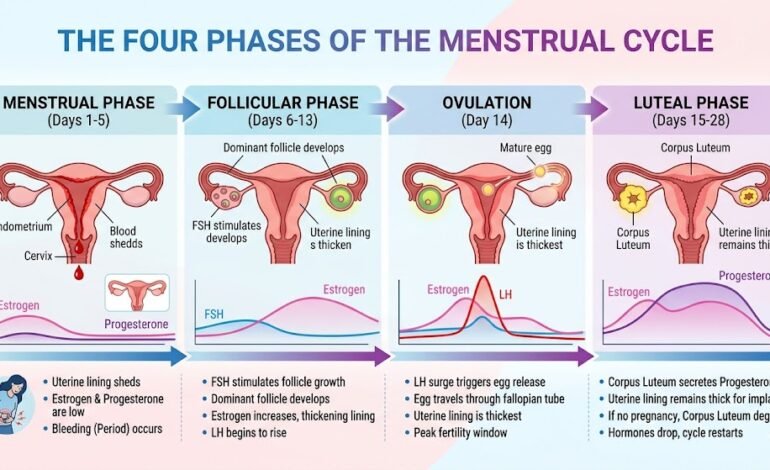

Menstrual cycle is a natural process that happens in a woman’s body every month. Its primary function is to prepare the body for pregnancy.. This cycle has four phases (stages).
4 Phases of Menstrual Cycle
1. Menstrual Phase
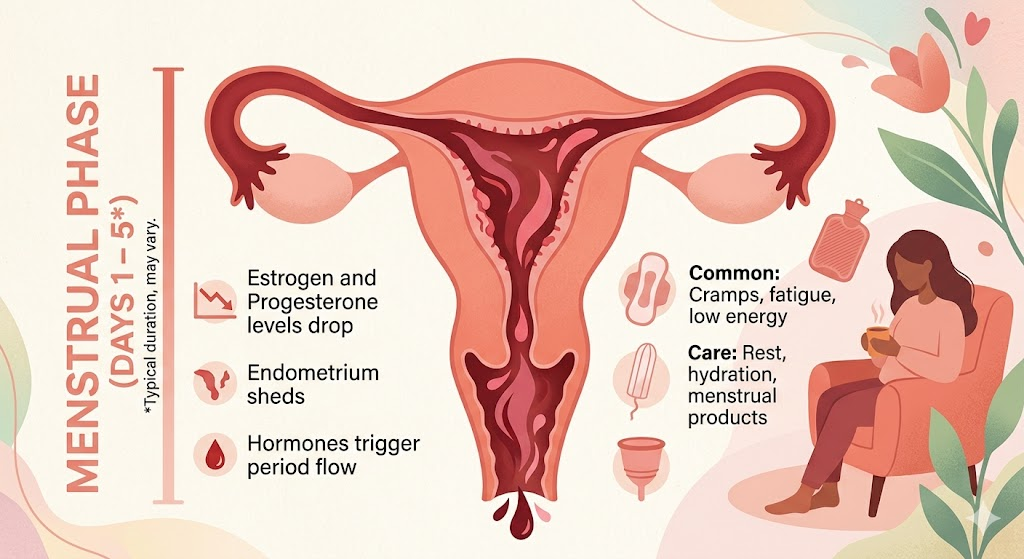
The menstrual phase starts on day one of bleeding. This stage marks the shedding of the uterine lining. The body removes tissue and blood through the vagina. This happens because pregnancy did not occur in the previous cycle.
- Menstrual Flow Duration
This phase usually lasts from three to seven days. Some women may have shorter or longer bleeding days. The flow can be light at the start and then become heavier. It may reduce again before it ends.
- Uterine Lining Breakdown
During this phase hormone levels remain low. Estrogen and progesterone drop. This causes the lining of the uterus to break down. As a result bleeding begins.
Typical Period Signs
Common symptoms appear in this stage. These include cramps in the lower abdomen. Back pain may also occur. Some women feel tired or low in energy. Headaches and mood changes are also possible.
- Self Care Tips
Rest plays an important role during this time. Light movement can help reduce cramps. Drinking water and eating iron rich foods can support the body. Warm compress can also ease discomfort.
- Menstrual cycle days
This phase clearly defines the start of the Menstrual cycle days. Tracking these days helps in understanding the full pattern of the cycle.
2. Follicular Phase
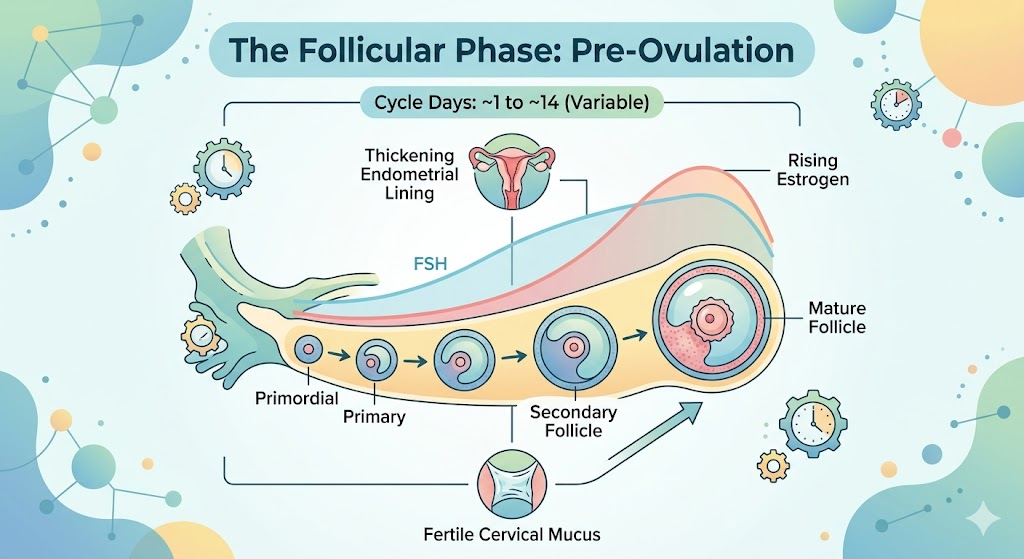
The follicular phase begins at the same time as the menstrual phase but continues even after bleeding stops. It focuses on the growth of follicles in the ovaries. Each follicle contains an immature egg.
- Egg Development Process
The brain releases a hormone called follicle stimulating hormone. This hormone signals the ovaries to prepare eggs. Several follicles begin to grow but only one becomes dominant. - Body Preparation for Pregnancy
Estrogen levels begin to rise during this stage. This hormone helps rebuild the uterine lining. The body prepares a fresh environment for possible pregnancy. - Positive Body Changes
Energy levels often improve in this phase. The mind feels clearer and more focused. Skin may also appear healthier due to rising estrogen.
Healthy Follicular Phase
This stage is important in the overall Menstrual cycle phases because it sets the foundation for ovulation. A healthy follicular phase supports proper egg development. - Proper Balance Diet
Lifestyle choices can affect this phase. A balanced diet with vitamins helps hormone balance. Regular exercise supports blood flow. Stress management also plays a key role in maintaining stability.
3. Ovulation Phase
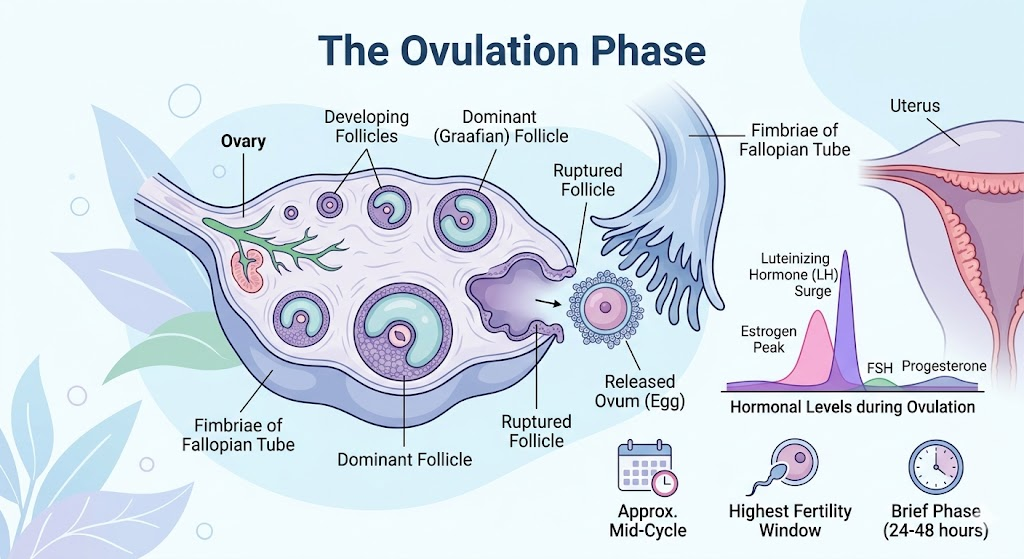
- Ovulation is the shortest yet most important stage. It usually occurs around the middle of the cycle. In this phase the ovary releases a mature egg.
- A surge in luteinizing hormone triggers ovulation. The egg moves from the ovary into the fallopian tube. It stays there for about 12 to 24 hours.
- This is the time when fertility is highest. If sperm is present fertilization can occur. If not, the egg will break down.
- Some physical signs can help identify ovulation. These include mild pain on one side of the abdomen. Vaginal discharge becomes clear and stretchy. Body temperature may rise slightly after ovulation.
- The Follicular phase supports this stage by preparing the egg before release. Both phases work together to complete this process.
- Women who track ovulation can better understand their fertility window. This knowledge helps in planning or avoiding pregnancy.
- Maintaining hydration and good nutrition supports this phase. Avoiding stress can also help in keeping hormone signals clear.
4 Phases of Menstrual Cycle
4. Luteal Phase
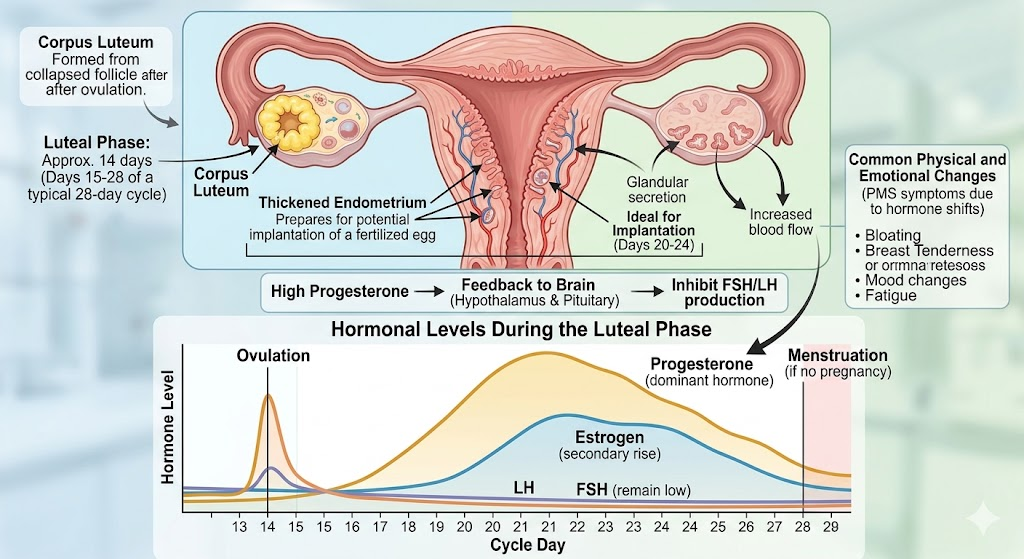
- The luteal phase begins after ovulation. In this stage the empty follicle transforms into a structure called the corpus luteum. This structure releases progesterone.
- Progesterone prepares the uterus for possible pregnancy. It thickens the uterine lining and supports implantation. If fertilization occurs the body continues to produce this hormone.
- If pregnancy does not happen the corpus luteum breaks down. Hormone levels drop again. This leads to the start of the next menstrual phase.
- This stage usually lasts around 12 to 14 days. It remains fairly consistent in most women.
- Many women experience Luteal phase symptoms during this time. These include mood swings and bloating. Breast tenderness and acne are also common. Some may feel anxious or low.
- These symptoms are often linked to premenstrual syndrome. Hormonal changes affect both body and mind.
- Managing this phase requires attention to lifestyle. Eating healthy foods helps reduce discomfort. Light exercise supports mood balance. Good sleep improves overall well being.
- Avoiding excess caffeine and sugar can also help. These changes can make symptoms more manageable.
Last and final insight
The 4 phases of menstrual cycle include menstrual phase, follicular phase ovulation and luteal phase. Each phase plays a unique role in preparing the body for pregnancy. Hormones control every stage and create physical and emotional changes.
Key point to know:
Understanding these phases helps women take better care of their health. It allows better tracking of symptoms and cycle patterns. Simple habits like healthy eating and stress control can improve the overall cycle experience. The 4 phases of menstrual cycle work together in a continuous pattern that repeats every month.